Galvanized by a new product idea, a young entrepreneur would often set out to lay the groundwork for a new enterprise. Often this exercise meets an insurmountable wall as the deluge of tasks that need to be done overwhelms the young businessman and discourages them from pursuing their goals.
If there is one thing that starting business owners need to understand is that they do not need to do everything alone. Tasks could already be portioned out to other groups that would have the expertise in handling such tasks. It is good that due to the development of new manpower options as well technology already available, the entrepreneur has now an option to outsource some of the tasks.
What is Outsourcing?
Basically, outsourcing is securing from an outside party certain tasks or services needed by the company but not core to its business. Companies started with the outsourcing of basic administrative work such as sanitation, repair and maintenance. However, other services have soon become available for companies to take advantage of, like backroom accounting work and legal services. Outsourcing help keep costs low for a company since salary increases and direct employee benefits are already taken of the company’s expenses and transferred to a third party. This is especially important for a business that is just starting as it eases on the capital requirement of the enterprise.
Outsourcing provides businesses with additional resources it needs but may not have the capital to cover. This especially includes the expertise of professionals of a certain field that would help in the growth of the company.
Steps to Undertake

1] List the Tasks at Hand
The entrepreneur has to allocate time to list all the activities involved in the business. This includes support services like human resources, firm infrastructure, technology and procurement. Depending on the business, the entrepreneur would have to make a decision in identifying which of these activities are core to the business and which are not. It is important to note that entrepreneurs make a rationale decision on these tasks and not just avoid the tasks that they do not want to do. Consideration also has to be done on the particular tasks that the entrepreneur is capable of doing as well as those tasks that needs to be directly controlled by the businessman.
Tasks that are usually outsourced are those that are repetitive and usually manual. These tasks can be delegated to outside of the company as it requires too much manpower from the company. Tasks that also entail specialized skills or expertise. Fully hiring personnel for these tasks would be very expensive for the starting business. Outsourcing these tasks allow the new business to secure the same expertise at possibly a lesser cost for the business. The same goes for tasks that require specialized knowledge that is not core to the business.
2] Identify the Appropriate Outsourcing Company

From among the tasks, it is good for the entrepreneur to identify the proper outsourcing company to engage. To do this, the following factors may be considered:
• Find an outsourcing company that is willing to work with you
The outsourcing company must be willing to sit down with the business owner in identifying and prioritizing the goals and needs of the enterprise. The outsourcing company must be willing to be an active partner in the growth of the company. It is important that the outsourcing company is engaged early on to make the most impact in the business operations.
An example of this is AScaleX. An all in one outsourcing solutions company, AScaleX provides and executes the marketing strategy of the new business as well as monitor the metrics to track the company’s growth. They work with the entrepreneur in focusing on what is needed and assemble a team to respond to client’s needs.
• Consider the price and the rules of engagement
At the onset, it is important that the business owner and the outsourcing company would come into a clear agreement of the services required and the cost to the owner. This entails agreeing on clear deliverable per task and the lines of authority between the owner and the outsourcing company. This would avoid misunderstanding later on as the business progresses.
• Consider accessibility
The outsourcing company must be accessible to the owner. This down not mean geographically as technology has already made it possible for easy communication regardless of location. Accessibility refer to the ability of the outsourcing company to respond to the needs of the client immediately. This would help ease the concern of the owner in the long run.
Outsourcing has already become a viable business that it is not difficult to identify the appropriate outsourcing company for a particular business task. One need only to surf the web in order to choose among a variety of options.
Over the years, companies who have outsourced have found the value and importance of keeping operations of their company focused on the core business as it outsourced all other functions to other companies who are more specialized in terms of services. Aside from the obvious long-term savings outsourcing generates a company, it also allows companies to benefit from tapping a wide array of professionals is a particular field. However, current political views gaining ground internationally, have raised the question of whether outsourcing certain operations of a company to a third party is still a viable option.
It is important to note that the value of outsourcing goes beyond political climate and there are other factors that growth of the industry, namely:
1] Specialization

Businesses are becoming more complex, having to deal with new technology, advancement in operations, and the need for a variety of disciplines involved in the running of the business. The burden of filling all the requirements of the business would create organizations that may become too unwieldy to properly manage and operate. Outsourcing provides the option of transferring non-core functions of the organization to other companies who may be better equipped to handle the specialized tasks.
2] Technological Advancements

Technology advances almost yearly; where new technologies, both soft and hard, come out almost negating what was previously learned. This is a burden for companies to keep their own personnel updated with these developments.
New technology also provide companies a greater chance for growth in terms of opening new markets or serving their customers in better ways. These kinds of development may result in radically changing current operations and processes with the company; this may result in slowing the companies operations and response to the market as it goes through its own learning curve.
Outsourcing has become an alternative for most companies as it relegates the functions of post production and dealing with the new developments to another company which would be in a better position to deal with these changes. Being in a particular field, outsource companies are mostly better equipped to deal with the advancement dealing with their field of expertise.
Technological advancement also expand the amount of services that an outsourcing organization could provide a company. Cloud based technology not only increases the support that outsourcing companies can provide companies but also faster interaction between the two companies. This will lead to increasing the sense of confidence companies with their outsourced services furthering the engagement between the two. The new development would also allow outsourcing company to offer other services beyond the initial investment; thus relieving companies more of their operational function and freeing them to concentrate on their core.
3] New Outsourcing Trends

Early engagement of outsourcing companies focused on operations and peripheral activities. Activities like administrative support, maintenance and backroom services of some organizational functions like payroll accounting, human resource training and development and bookkeeping activities. Lately though there is a noticeable expansion in the engagement centering on organizational development such as product innovation, marketing, simple and complex problem solving, customer service care and developing and handling new technologies. This reflects the continued growth of companies as well as their desire to remain true to their core business.
Marketing for example has changed drastically over the years as more and more people become online. Companies have to find a way to not only reach this new market but to service them as well. Outsourcing advertisement, ordering and delivery systems is a way for companies to take advantage of this development among customer habits without having to make changes in the current operations or hiring new personnel.
Management of off-site operations has also become a new field in outsourcing as companies identify new sources of raw materials in other countries. In the past, companies have been criticised for neglecting to oversee their operations in other countries which may have already been violating labor laws and basic human rights. By outsourcing the management of these sites, companies can guarantee that the operations in these sites are in keeping with their company’s processes and quality requirements.
Outsourcing solutions by AScaleX

Idea generation and strategy development think tanks are pioneering in the expansion of outsourcing services. To keep relevant with the changing times and needs of the market, companies need to constantly innovate. However, companies find it difficult to do this since most of their personnel are focused on the operations. Likewise, personnel who are used to the “usually ways of doing things” are apprehensive to innovate as it takes them out of their comfort zones. Outsourcing this important activity to a AScaleX provides companies with an unbiased resource dedicated to improving the company’s product and service.
It is safe to say that outsourcing remains a viable business solution. It shall continue to provide the particular skills needed by businesses and shall grow into areas that provide more freedom for these businesses to develop their core ventures.
Financial data management is one of the most essential aspects of a business. Keeping operations afloat and determining if all monetary transactions are compliant with various laws and regulations is the particular task of Vice-President of the Accounting Department.
Companies may be forced to stop their operations if regulating bodies spot discrepancies in any financial information provided by its management. As such, the Vice-Presidents are key actors in a company to oversee a company’s financial operations, such as bookkeeping, data collection, data protection, and data analysis.
Thankfully, there are options already available for a company to outsource this task without disrupting the flow of operations and accountability of functions. In fact, a 2018 Client Accounting Services (CAS) Survey conducted by CPA.com reported that 78% of companies today are in favor of outsourced accounting work rather than hiring a full time employee.
Whether you are a start-up or a continuously growing company, here are some major advantages to outsourcing the Vice-President position responsibilities:
Outsourcing allows for more flexibility.
Simply put, outsourcing all accounting and bookkeeping duties enables company management to focus on their businesses’ core functions. Collecting data on its own might be a chore when done in-house, thus increasing the likelihood that companies will have to divert their attention from regular business operations. By outsourcing, companies can instead save valuable time and energy to focus on their strengths and increase overall profitability. Since the accounting responsibilities are already outsourced, the management of these responsibilities can also be outsourced.
These challenges are especially true when large-scale data analysis is involved– most companies simply do not have time for these hectic responsibilities. The 2018 CAS survey reflects this statement, in which it states that nearly 80% of companies have reported greater financial insights and improved operational efficiency after they outsourced their accounting work.

Outsourcing the Vice-President for Accounting Position reduces risks of fraud.
It is a proven fact that most SMEs and MSMEs today do not need the skill set of a CFO or a senior financial controller, since these firms are not engaged in large-scale business anyway. However, it is also these types of companies that are likely to be victims of fraud, since it is likely that the person in charge of accounting tasks is not a master accountant.
In fact, a study conducted by the Association of Certified Fraud Examiners in 2012 mentioned that privately owned small businesses with less than 100 employees are the most susceptible to fraud. The study went to say that the median fraud amount of USD 147,000.
With outsourced accounting, both small and large companies are hiring third-party controllers that can set up risk management controls relating to accounting fraud and, as a whole, safeguard the company’s accounting processes. In layman’s terms, companies have their own sets of eyes in case there are attempts of fraud both internally and externally.
The 2018 CAS Survey likewise reflects the above statements. One of their most significant findings is that half of the companies involved in the study said they worry less about mistakes and generally have that peace of mind.
Outsourcing the Vice-President for Accounting Position is more cost-efficient.
If management is keen on minimizing costs, outsourced accounting operations are infinitely better. This is simply due to the fact that you remove any expensive benefit packages accorded to full-time and part-time employees. With outsourcing, you get can offload other expenses such as health insurance, retirement benefits, overtime fees, as well as office supply allocations.
A cost benefit analysis on outsourced accounting vs. in-house accounting shows that companies can save up to 40% when outsourcing all accounting work. The ugly reality of in-house accounting is that it will cost the company more while they may be delivering less than expected.
On average, staff accountants alone earn USD 63,980 annually, while outsourced accountants can be hired for as low as USD 24,000– an astounding 62 percent difference when the two figures are compared. This huge difference can be attributed to employee benefits, which may cost at least 43 percent of the accountant’s annual salary, combined with a separate 10 percent charge for payroll taxes.

Outsourcing the Vice-President for Accounting Position allows access to expert opinion.
Accounting firms are hired primarily to take on huge accounting responsibilities for their clients, but they are also keen on providing expert financial advice. Outsourced Vice-President accountants have the skills and experience to ensure that financial insights are always spot-on. They also have a wide network of other accountants to help you with your accounting needs.

AScaleX lets you focus on your operations while we handle your accounting duties
Outsourcing is now a common practice because, as company owners/managers, you may allocate more of your resources to the company’s operations. When you partner with AScaleX outsourcing, you’ll have more time to focus on your products and operations which can mean better quality and productivity. Most importantly, allowing our accounting professionals keep tabs on your financial assets can also help give you a peace of mind and lessen the risks.
To learn more about our strategies and how we can tackle your accounting and bookkeeping needs, schedule a meeting with us now at https://ascalex.com/.
Starting a business is a fun activity that can lead to financial freedom and self satisfaction. However, a number of entrepreneurs are afraid to make that first step. These are the common roadblocks in starting a business and the opportunities available to overcome it.
1] Lack of Capital
In planning to start a business, it is important to take stock of how much it would need to actually start the entire business and compare this with how much one actually has. The capital currently available determines the scope of operations (local, national, or international), the volume of production and the number of personnel that needs to be hired to ensure successful operation. Depending on the initial vision of the entrepreneur, this could be a daunting task. Initial plans may be scaled down to fit the capital available. It is important for the entrepreneur to establish solid grounding first of its business and expand operations accordingly.
Considerations on the capital would also have to consider buffer funds for the first three years of operation. This would ensure that capital is reserved to ensure business sustainability as it establishes its footing for the first few years.
Studies have suggested that at this stage, it is important for the entrepreneur to concentrate on the growing of the business; to the core of what makes the business or the product unique for its customers. Other operational tasks can be outsourced to a third party so that there is no need to directly hire personnel for backroom tasks. This would ease the capital requirement of the new company a lot during the first years.
2] Establishing a Solid Market

Most enterprises’ customer base is among those already close or known to the entrepreneur. However, in order to entice investors to the business there is a need to show that there is a solid market for the product and there is a potential for growth. New enterprises would need to expand its initial market and show a consistent market projection.
It is very hard for a new entrepreneur to concentrate on product development and marketing at the same time. It is fortunate that there are already outsourcing companies that specialize in marketing. These companies could help the entrepreneur to identify the “hook” for their products and plan and execute strategies to reach this new customer base. Since the engagement is outsourced, it frees the new business from directly hiring personnel with specific tasks; lessening its marketing costs.
3] Feeling of Loneliness

Studies have shown that one major roadblock for a new entrepreneur is the feeling of loneliness. Faced with the burden of building the business alone, entrepreneurs begin feeling that they are all alone, and the pressure might be enough to cause the entrepreneur to surrender the endeavor. It is important that the entrepreneur is able to establish relationships along the way wherein concerns can be discussed and new ideas and strategies and can be developed. It is also important for the entrepreneur to feel confident with the operations of the business so that they can concentrate on core aspects of the new enterprise.
Outsourcing certain operations of the business provides a level of comfort that certain operations are taken of and that the entrepreneur would have a number of professionals available for discussion of ideas, strategies and business concerns. Engaging outsourcing companies would help make the entrepreneur to feel less alone in establishing the business.
AScaleX as Your Partners in Growth

New entrepreneurs are lucky that at this day and age, there are already a variety of available options that could be taken advantage of to get a new business started. In outsourcing operations to another company, it is important to consider the following:
- Engage a trustworthy outsourcing company that could work within your budget. This would entail looking at the clientele of these companies and their level of relationship and work accomplishment for these clients. It is also important to carefully study their proposal and the fine print of their contract in order to avoid hidden costs that may impact on your budget.
- Bring the outsourcing company on board during the planning phase. Bringing an outsourcing company early helps facilitate the streamlining of operations, clarification of roles between the entrepreneur and the outsourcing company and the overall direction envisioned by the entrepreneur. The outsourcing company could also help in planning strategies that will unburden the entrepreneur to concentrate on other essentials of the business.
AScaleX ensures that we fulfill these criteria by collaborating with our partner startups and detailing what it is we intend to do to help with their company growth. Our team of dedicated experts create strategies specifically made for our partners, addressing pain points and areas to improve.
More importantly though, we want to make sure that we are able to carry out the vision of our partners by discussing with them their objectives and milestones. By understanding these, we can better support them by directing all efforts towards this vision.
Overcoming the roadblocks in starting a new business is a task that all entrepreneurs must face. Engaging the services of outsourcing companies like AScaleX helps a lot in easing the burdens of new businesses and create partners that align with the goal of the entrepreneur. It is important that this available resource is considered by the entrepreneur.
Let’s overcome these roadblocks together. Schedule a meeting with us at https://ascalex.com/ and let’s discuss!
Getting to know Slack’s success story and how outsourcing played a key role in its growth.

Remote working has become quite the norm in recent years. In addition to the time saved from not having to commute to work, it has significantly improved employees’ work-life balance, and has therefore increased both productivity and job satisfaction.
But with remote work comes challenges, most prominent of which is making sure everyone is on the same page. You’d need a tool that can help your team collaborate better as if they’re face-to-face without losing the breathing space that comes with working from home.
This is why Slack became really popular with companies who employ remote or offshore talent, and even those with in-house staff. Finally,a workflow app that centralises all conversations, documents, and other third-party tools for a more convenient work experience.

Peeking Behind The Curtain: Slack’s Story
Slack was launched back in February 2014 and has since become one of Silicon Valley’s biggest success stories. In the five years that it has been active, they have around 8 million daily active users, 3 million of which paid for their enterprise packages. Pretty soon, they had earned the highest conversion rate in the history of freemium software products, is being used by at least 43% of Fortune 100 companies, and reached a valuation of $7.1 billion as of August of 2018.
But Stewart Butterfield, CEO of Slack, took a while to find out that his idea was going to be key to building a useful communication system.
He started his career in 2000 with a startup he built with a friend called Gradfinder.com (now Friendfinder.com). After the website was acquired, he worked as a freelance web designer. But using his severance pay, he co-founded Ludicorp, a company that developed a massive multiplayer online role-playing game called Game Neverending.
The game didn’t see the light of day.
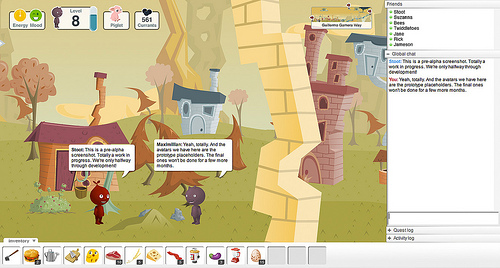
But a product of his and the team’s work was a technology that allowed users to tag images and other users long before Facebook and Instagram started doing it. This paired with their dwindling finances, the company launched a photo-sharing website called Flickr.
With help from Google who just bought a CMS platform called Blogger at the time, they were able to get users for Flickr fast. It soon became difficult to sustain Flickr, mainly because the storage costs were high and the team wasn’t making any sizeable profit. So in March of 2005, Yahoo! stepped in and offered to buy Ludicorp for$20 million. Butterfield stayed on as General Manager of Flickr until July of 2008.
A year after, Butterfield launched yet another gaming company called Speck. Because of his success with Flickr, he was able to raise $17.5 million to fund his first project called Glitch. While it did attract a lot of users, it wasn’t enough to keep the company afloat. On top of that, he was suffering what most startups deal with – financial hemorrhage. In December of 2012, he decided to pull the plug on Tiny Speck, but made all the Glitch content available online.
However, while he and his core team were working on Glitch, they were apparently already starting an instant-message based team communication tool which would be Slack.
Of Perfect Timing and Addressing the Right Problem
We’ll get a little technical in this bit.
When you’re starting a company, there’s a core problem that you need to address in order to provide a relevant product or service. In terms of revenue opportunity, there are three levels, as shown below:
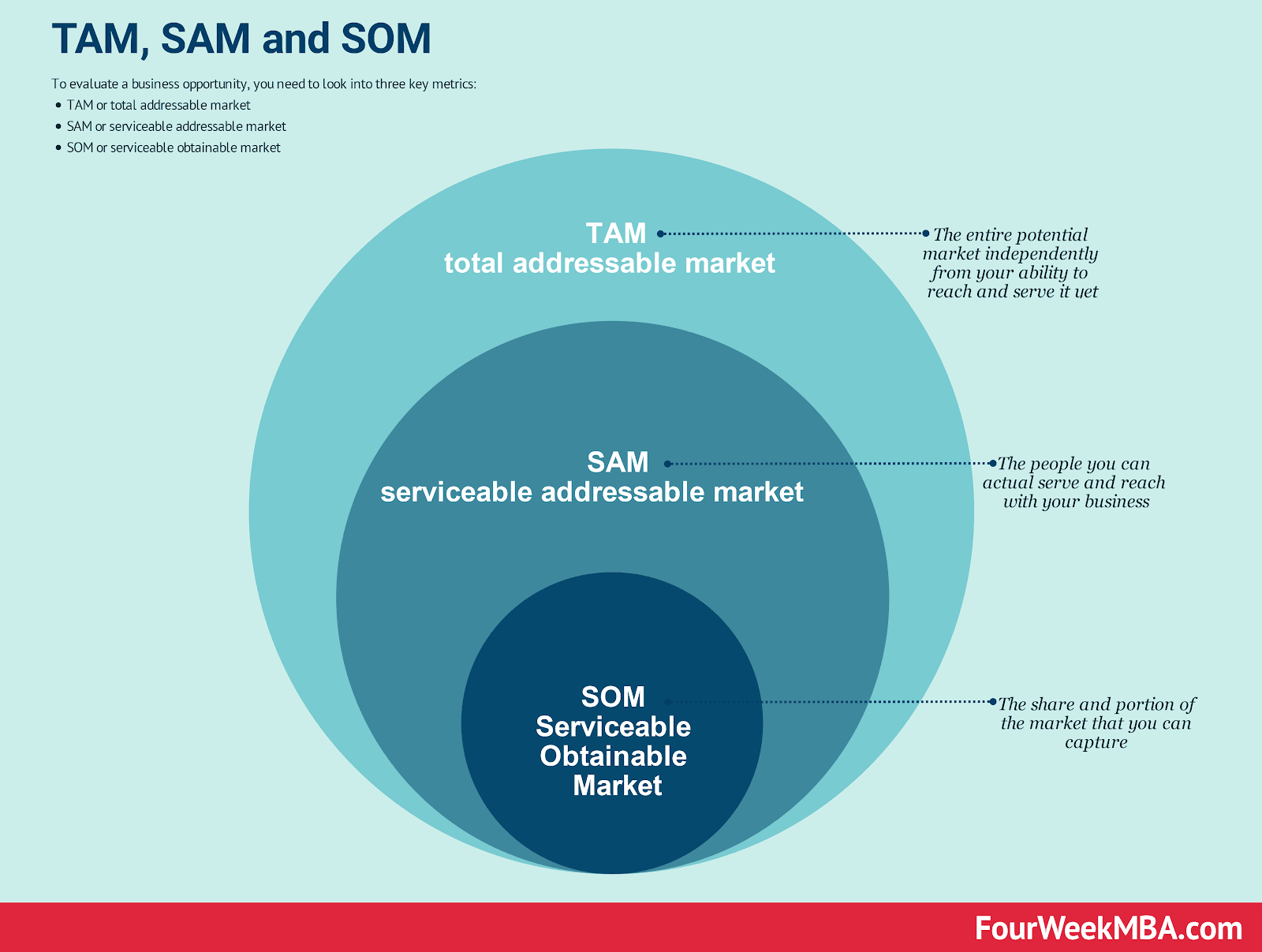
Most companies have had problems with internal communication, especially if they began as a startup that suddenly scaled to 20, 30, or more employees in just a short amount of time.
You can probably picture it: an inbox full flooded with emails from each department, painstakingly scrolling up to look for a document someone uploaded in chat, and switching from one third-party tool to another.
Slack couldn’t have come at a better time.
There was competition, for sure, like Campfire, Yammer, and HipChat who each had loyal users already. If Slack wanted to get ahead, they needed to be the best. They didn’t just want to improve internal communication, they wanted to take the problems of the TAM, with companies that range from startups to established enterprises, and use it for their advantage.
This is the motivation behind Slack’s core features:
- Seamless chat, direct messaging, and video calls within and between team members
- Multiple device and platform capabilities
- Third-party app integration
- Advanced search and customizable notifications
These on top of intuitive use, customer-centricity, and their overall fun approach in their brand, they were already meant to lead the race.
Outsourcing as Key to Slack’s Success
It can be a doozy to run a startup business.
Apart from competing with companies who have already built a reputation, you’ll need to accomplish many things. Find a problem in the market, create a solution, and build a reputation of credibility and trust to gain users. If you find that your solution isn’t up to the task, you’ll have to come up with a new one before money runs out.
For Slack, they already know they have the best solution to a major problem. They just need to find a way to test it.

Slack has outsourced the services of a design firm in conducting design and copy testing for them. What they did was release a preview version of the platform to a select few and see how their core features work. Not only was this a way to improve on the platform, but also to build a relationship with the companies who are using their product for the first time.
The test allowed them to fix bugs, find out which of their features resonated the most with the users, and make sure the testers are satisfied enough to recommend it to other companies.
Through an outsource company, as soon as they were for public launch, they were able to collect enough testimonials from well-known companies that they can show-off both on Twitter and their website. Slack also got their unique design which ensured brand retentiveness and a tone that is informal and friendly from the firm.
They also made use of PR agencies to help them create an image, the most popular of which is Slack as the “email killer,” a hook used by tech publishers like The Verge, TechCrunch, and Fast Company.
Their outsourcing strategy earned them $250 million worth of investment, raising their valuation to $5 billion in July of 2017.
Main takeaway
Outsourcing allowed Slack to better understand the needs of the market, find ways to offer more than just solving internal communications, and more insights into what is important to users. A partnership with another party tasked to create the entire look and feel of the brand meant that they can focus on their product.
Through their success, they’ve shown that outsourcing isn’t just reserved for minor components of starting a business and the amount of talent outsourcing can provide to new companies can be key to success.
At AScaleX, we value our collaboration with our partner startups. We make sure that we are able to capture what it is they want and the objectives that need to be met. In this way, our partners can focus on improving their products and services while we take care of the rest. Much like what happened with Slack, our expertise in lead generation can help companies grow exponentially.
We’re more than happy to share our ideas with you. Do drop a message at https://ascalex.com/ and let’s talk!
Here’s everything marketers must know to improve personalization for their customers.
Everyone clamors for relevance and relatability, even when it comes to marketing brands. The more that your product or service relates to your buying public, the more relevant you are in becoming their brand of choice. Preferences are highly personal. It reflects your consumers’ most wanted needs and they are always looking for the best in the market to satisfy them.
That is why personalization at scale has become a vital component in creating your marketing mix. Being able to create highly targeted marketing campaigns is both a science and an art form, which requires you to create tailored messages or offers to individuals based on their actual behavior.
Importance of Personalization
Personalization enhances customers’ lives and increases engagement and loyalty by delivering messages that are tuned to and even anticipate what customers really want.
Some fast facts:
- 85% of customers look for a personalized experience
- Only 23% of customers think that marketers and retailers are doing a good job at it
- Personalization can reduce acquisition costs by as much as 50 percent,
- It can lift revenues by 5 to 15 percent
- It can increase the efficiency of marketing spend by 10 to 30 percent
These data, despite being published by the Harvard Business Review in 2015, still holds true to this day where the customers’ demand for personalization is higher than ever before. The disparity between the expectations of the customers and what the businesses offer them must be delivered and this is only possible when businesses employ marketing strategies that went through the customer journey.
Benefits of Personalization at Scale
If your business is able to deliver personalization at scale, then it can yield the following benefits:
- 4–5 times increase in revenue
- 5–6 times faster results from emails
- 8–10 times higher testing
However, this is not an easy task. Many businesses don’t even know where to start from. But, this is also not something that can be ignored. Every business faces a plethora of challenges when it comes to achieving personalization at scale.

Challenges in Achieving Personalization at Scale
When trying to be personal, one can become too flexible with the concept. The main challenge in incorporating personalization when doing marketing campaigns is striking the balance between being appropriate versus being invasive.
Like for email marketing, adding simple touches of mentioning the customer’s name in some parts of the content can already make a whole lot of difference, as opposed to receiving a generic greetings or no greeting at all.
Here are the three main challenges that marketers and businesses must be prepared for:
1. Collection and Mobilization of Data
Marketing is all about knowing your market well, for obvious reasons. To make sound decisions, businesses especially startups should rely on relevant data and use them as guidance.
Relevant data, when used in integrating personalization at scale with your marketing initiatives, can provide you better insights on your customers’ needs, wants and preferences. Data-driven strategies are also much easier to monitor and gives you measurable results.
These results can then become inputs on your other marketing efforts, which you can then build on to construct a solid business strategies. In addition, it is also vital to establish proper data governance to ensure that the data is collected and mobilized in the best possible manner.
2. Privacy Considerations
In the advent of technology, personal information has become too public for consumption on certain occasions. As digital marketers, you must always be aware of all the ethical and legal considerations when they are collecting data. For instance, collecting personal information from a customer’s medical history is not only inappropriate but also unethical. It may also lead to legal repercussions.
Therefore, businesses must respect these limitations when they are collecting and using data to offer personalization at scale. They must always abide by the laws and regulations of the place where their business is set up to avoid getting into any legal troubles.
3. Organizational Mismanagement
Another main factor that often leads to marketing failures is organizational mismanagement and lack of communication. All the departments of an organization, especially the sales and marketing department, must work closely together if they wish to achieve personalization at scale for their customers.

How does a business achieve personalization at scale?
Here are some important steps and tips to follow:
1. Build a Data Foundation
A business must start with a data foundation and centralize their data activation channels. A single decision-making mechanism will keep you and your business well-informed and connected with all the channels and continuously improve your relationship with your customers.
2. Using the Right Technology
Using new and innovative technology can help businesses improve their customer reach and engagement. New tools and technologies are now available that are centric to streamlining processes for marketing and personalization efforts.
Timing is everything, especially in deploying messages at the right time to help them win over customers. It also increases customer engagement and achieve the desired return on investment of the business.
3. Scale and Speed
Agile methodology have exponentially increased in popularity to address human nature’s need for instant gratification. Due to a more stiff market competition, businesses who lag behind are truly left behind in every sense of the word.
Establishing agile operations rely on scalability and speed. It all boils down to the main objective of staying relevant to your target audience. A customer doesn’t have time to wait for weeks to get the products they are looking for. They will have tendencies to move to your competitors that are providing better and faster services.
Create cross-functional, highly-effective and efficient teams to create an agile environment that can provide high-touch, personalized approaches in meeting customers’ needs.
4. Demand Generation Strategy
A business must have an effective demand generation strategy to bridge the gap between the sales and revenue operations of the company. This strategy should be in place in addition to the lead generation strategy, which is also another important component of achieving personalization at scale. You must find the best touchpoints that can help you engage with your customers. Use this opportunity to engage with them and give them as much information about your products or services as possible.
Personalization at scale is not an option for businesses anymore. It has become truly necessary to be successful in creating brand retention for your target market.
It is important to invest your time and effort in understanding the core concepts of this idea and implement them in the organization to improve customer relations, market relevance, and personal engagement.
Need Help with Your Business Marketing?
At AScaleX, we offer a one-stop solution to all your marketing needs.
Cost-Effective Solutions
AScaleX offers cost-effective solutions that can help your business achieve personalization at scale without the need to spend a fortune on it. You can discuss your specific needs with our team of experts and they will design a tailored solution to meet your needs.
Highly Experienced Team
What sets us apart from other companies out there is our highly experienced team. Our experts have years of experience and industry knowledge. They keep a close eye on the latest marketing trends and offer personalized solutions to each of our clients.
Get in touch with us to know more.