Ever feel like you’re always chasing the next big marketing trend, and then hoping it’ll be the answer to your business’ explosive growth? We’ve all been that person.
But what if there was a way to use more than just fleeting tactics and build a sustainable growth engine for your business?
Enter the world of growth marketing.
What is Growth Marketing?
Conventional or what we know as traditional marketing primarily involves creating awareness through campaigns and advertisements. It focuses on the brand itself. Whereas growth marketing concentrates on achieving fast, consistent growth through every step of the customer process. In other words, its focus is on the entire customer journey. The full marketing funnel.
But what specifically sets them apart? Growth marketers use analytics and customer data to experiment and optimize marketing strategies for improved results.
As Mark Fiske, a Senior Executive Director at Digital Strategies, explains:
“Growth marketing is the set of practices, rituals, and processes rooted in experimentation and understanding of the customer that ultimately results in sustainable, repeatable, growth for an organization.”
Why is Growth Marketing So Hot Right Now?

In today’s cutthroat digital environment, we should not depend only on attractive branding and memorable slogans. To distinguish ourselves, we need smart tactics supported by data that can break through the clutter and get through to our desired audience – our target market.
This is where growth marketing excels. By combining creativity with analytical skills, it allows growth marketers to identify the most effective channels and messages so we can achieve maximum ROI.
Let’s take a look at some key benefits of an effective growth marketing strategy:
- Rapid acquisition of new customers
- Higher customer lifetime value and retention
- Lower customer acquisition costs over time
- Ability to scale and grow rapidly yet sustainably
Now that we’ve got the what and why sorted out, let’s get into how to actually develop a killer growth marketing strategy.
Building Your Growth Marketing Strategy Step-by-Step
So where do we start with our growth marketing strategy?
Regardless of what industry you’re in or what type of company you run, these foundational marketing strategies are a must.
1. Define Your Goals and Key Metrics
Just as with any effective marketing strategy, it is important to establish first, clearly defined, trackable objectives that are in line with your overarching business goals. Think measurable targets like:
- Increase monthly recurring revenue by 25% this year
- Acquire 500 new customers per month
- Boost email list by 10k subscribers per quarter
- Achieve 40% annual revenue growth rate
Then outline the key metrics you need to monitor, such as conversion rates, customer acquisition costs, and churn rates. Using tools like Google Analytics and CRM platforms can be very helpful for measuring data.

2. Research Your Target Audience
Who exactly are your ideal customers? What channels and type of content really clicks with them? Time to dive into audience research!
Use surveys, social listening, analytics, you name it. The more detail you can gather on their demographics, interests, pain points, buying journeys – the better. Getting hyper-specific on your target personas will power the rest of your strategy.
Don’t know how to start with personas? Download our free template here to get started.
3. Map the Customer Journey
Next, chart out each touchpoint in the customer journey from recognition to support. Having a full-funnel mindset is what you need to succeed in growth marketing.
Here are a few stages and the corresponding content as examples:
- Awareness: Blog content, social media, SEO
- Consideration: Webinars, email nurturing
- Conversion: Free trials, sales demos
- Retention: Loyalty programs, upsells
- Advocacy: Reviews, referral schemes
Nailing your audience’s end-to-end journey is key to developing resonant, growth-oriented strategies.
4. Brainstorm Potential Channels and Experiments

Time to get creative! Based on your goals and audience research, brainstorm all the potential marketing channels and campaigns you could experiment with.
Some high-impact options loved by growth teams:
- Content marketing (blogs, videos, podcasts)
- SEO and SEM
- Email marketing
- Social media
- Partner/Affiliate marketing
- Referral programs
- Free tools or trials
- Sales outreach
- Mobile app promotions
Look at what’s working for competitors or growth leaders in your industry as inspiration. Tools like SimilarWeb can give you a peek into their top acquisition channels.
5. Prioritize and Design Experiments
You can’t test everything at once, so prioritize 2-3 high-impact experiments to start based on your goals, resources and audience data. Design each test methodically:
- Hypothesis: What are you testing and why?
- Success metrics: How will you measure results?
- Timeframe: How long will you run the test?
- Control group: What’s your benchmark?
Document every aspect to ensure data integrity. Use platforms like Unbounce and Optimizely to simplify experiment design and deployment.
6. Execute and Analyze Results

Launch your first round of experiments and monitor the performance data closely. Once you have a good amount of data, it’s a good time to analyze the results and think about creating iterations.
Become a data guru. What worked awesomely? What flopped? How can you amplify the wins or pivot from the losses? Don’t be afraid to dig into both quantitative metrics and qualitative feedback.
Growth marketing is a continuous process of running new experiments based on learnings. Rinse and repeat!
7. Scale What Works
As certain channels and tactics prove successful, invest more resources into scaling them up. Automate and systematize processes as much as possible.
This compounding growth is the bread and butter of a good growth marketing strategy. JJust look at how Hubspot strategically used content marketing for massive growth:

Image from SaaStr
Iconic Examples of Brilliant Growth Marketing
To wrap up, let’s look at some iconic examples of brilliant growth marketing strategies that propelled businesses to new heights:
Dropbox
The file-sharing company is a master class in incentivized referral marketing and viral growth loops. By offering free storage for referrals, they added millions of new users. Simple but genius!
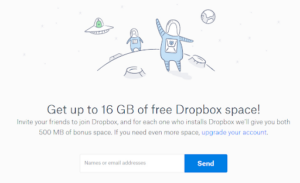
“Our constraints cultivated some of our biggest growth techniques like the referral program.” – Drew Houston, Dropbox CEO
Dollar Shave Club
With a hilarious viral video, DSC showed the power of creating buzz-worthy content. Their $4,500 video generated over 12,000 sign-ups in 2 days and millions in revenue!
“For us, everything was tied into the viral video.” – Michael Dubin, CEO
Spotify
The music streaming service lets users share songs across social platforms for free, displaying paid subscription ads. This a brilliant “freemium” model that constantly generates new users primed for conversion, boasting a 46% conversion rate to paid services. In comparison, Slack has a conversion rate of just 30%, while Evernote sits at 4%, and Google Drive at 0.5%.

As you might have garnered from the example above, these brands were able to rapidly scale and dominate their markets by staying laser-focused on sustainable growth, constantly experimenting, and optimizing their strategies.
Growth Marketing vs. Traditional Marketing: How Do They Compare?
Below is a table that lays out the contrasts side by side, like two pictures from different eras. One showcases the classic, broad-brush approach, while the other zooms in on the fine details, adapting with every brushstroke.
So, take a moment to peruse this comparative snapshot—it might just be the map you need to navigate the marketing landscape ahead.
| Growth Marketing | Traditional Marketing |
| Data-driven, focused on rapid growth | More focused on brand awareness & acquisition |
| Targets full customer lifecycle | Linear, campaign-based approach |
| Utilizes experimentation and constant iteration |
Relies more on “gut feel” than hard data |
| Emphasis on digital channels and loops | Heavier use of outbound, offline channels |
| Metrics like CAC, LTV, viral coefficients | Metrics like impressions, conversions, sales |
Of course, the two marketing styles can be complementary when used in tandem skillfully. But if rapid, sustainable growth is your goal, incorporating growth marketing strategies is a must.
Start Developing Your Growth Machine Today
In today’s uber-competitive landscape, growth marketing isn’t a nice-to-have, it’s a necessity. When you combine the right data, creativity, and experimentation, you can create a powerful growth strategy to scale your business like never before.
So what are you waiting for? Follow the steps above, study those inspiring examples, and start developing your own growth marketing strategy.
Need help? Let’s talk.
Remember the good ol’ days when a single celeb shout-out could send sales through the roof? Yeah, those times are fading faster than a disappearing Instagram story.
The influencer game is totally different now. It’s like it’s morphing, evolving into something brand new, and the hottest new stars are these nano and micro-influencers.
But who exactly are these nano and micro-influencers? And why should we be, well, obsessed with them?

The Influencer Hierarchy: Who’s Who in the Zoo?
First things first, though. Let’s break down the influencer zoo! We need to understand who these players are before we unleash their marketing magic. Here’s a quick rundown of influencers based on their follower count:
| INFLUENCER TYPE | FOLLOWER COUNT |
| Mega Influencers | 1 Million + |
| Macro Influencers | 100,000 – 1 Million |
| Micro Influencers | 10,000 – 100,000 |
| Nano Influencers | 1,000 – 10,000 |
Why Nano and Micro-Influencers are Dominating the Industry

Sure, mega-influencers might seem like brand exposure gold – millions of followers, right? In reality, their massive follower base doesn’t always translate to the loyalty and credibility you need to drive sales.
And here’s where nano and micro-influencers can save the day for your brand:
- They Get Real Engagement, Not Just Likes: Forget crickets after a post. Nano and micro-influencers typically boast way higher engagement. Think comments, likes, shares — all signs that their audience is actually listening and interested in what they have to say (about your product, of course!).
- Trust Factor on High: These smaller influencers often cultivate close-knit communities built on authenticity and shared interests. Their followers see them as relatable friends, not distant celebrities. This translates into higher trust in their recommendations, making them powerful advocates for your brand.
- Laser-Targeted Reach: Nano and micro-influencers typically appeal to specific niches or communities. Picture a small influencer who is dedicated to promoting sustainable fashion — their audience is probably already interested in environmentally friendly items, making them an ideal demographic for a line of organic clothing.
- Budget-Friendly Marketing Win: Unlike mega-influencers who charge an arm and a leg, partnering with nano and micro-influencers is way easier on the wallet. This frees up resources for you to invest in creating killer content or working with more influencers.
Tips and Examples for Success with Nano and Micro-Influencers

Now that you’re pumped about the power of nano and micro-influencers, here are some killer strategies to weave them into your marketing strategy like a boss:
- Find your influencer BFF, not just a follower number. Forget just chasing follower counts. Instead, prioritize influencers whose values mirror your brand’s, resonate with your target audience, and align with your content style. Do your research! Dig into their engagement rates, follower demographics, and past collaborations to find the ideal partners.
- Authenticity is King (or Queen). Consumers have a nose for a phony endorsement. Focus on building genuine partnerships with influencers who truly love your product or service. Give them the freedom to showcase it in their unique voice and style — forced content is a major turn-off.
- Map out the customer journey. Influencer marketing isn’t a one-night stand (marketing-wise, at least). Think about how your influencer collab fits into the bigger picture. Are you trying to spread brand awareness, drive website traffic, or shout about a brand new product launch?
- Ditch the boring sponsored post. Let’s get creative! Explore co-creating awesome content formats like product reviews, super helpful tutorials, or even live Q&A sessions. This keeps things fresh and lets the influencer’s creativity shine.

- Turn fans into brand champions. Leverage the power of user-generated content (UGC). Encourage your influencer partners to run contests or giveaways that get their followers creating content featuring your product. This creates a snowball effect, boosting brand awareness and authenticity like wildfire.
- Think long-term, not one-time fling. Building long-term relationships with a handful of key nano and micro-influencers can be way more effective than a bunch of one-off collaborations. This allows you to build trust with their audience and develop a consistent brand story.
- Emotions rule the game. People connect with stories and feelings. Encourage your influencer partners to weave storytelling into their content. How does your product or service make their lives better? Highlight that emotional connection — it’s a powerful tool for building brand loyalty and sales.
- Incentivize, don’t dictate. Of course, offering compensation is important, but remember, authenticity is key. Provide clear campaign guidelines, but also give your influencer partners the freedom to express themselves creatively. That’s where the real magic happens!
Real People, Real Results: How Brands are Crushing It with Nano and Micro-Influencers
Ready to see some real-world wins? Buckle up, because these brands are totally killing the game with nano and micro-influencers:
- Outdoor Voices: This activewear brand isn’t messing around. They team up with micro-influencers who are fitness fanatics and outdoor enthusiasts through and through. Their content feels authentic and relatable, perfectly capturing the hearts (and wallets) of their target audience. Check out their “Doing Things Network” to see it in action.

- Glossier: Remember the days of celebrity makeup endorsements everywhere? Glossier tossed that rulebook out the window. Instead, they built a loyal army of beauty enthusiasts, all micro-influencers in their own right. These beauty besties consistently promote Glossier products in a genuine and relatable way, making them super trustworthy sources for makeup tips. See how they cultivate their superfan community in Peter Fisk’s article here.

- Frank Body: This Aussie coffee scrub brand took Instagram by storm, and guess what? It all started with micro-influencers! They have a killer user-generated content (UGC) strategy that encourages customers to share their experiences with the scrub. This builds trust and brand love like nobody’s business. (See it in action on their Instagram: https://www.instagram.com/frank_bod/?hl=en).
The Final Takeaway: Marketing with a Human Heart

The influencer marketing game is constantly changing, but one thing remains constant: authenticity and trust are king and queen. Nano and micro-influencers are the secret weapon for building those connections. By partnering with these powerful advocates, you can forge deeper connections with your target audience, skyrocket engagement, and ultimately fuel long-lasting growth for your brand. So, ditch the impersonal marketing tactics and embrace the human touch – your brand will thank you for it!
So, what are you waiting for? Go forth and conquer the world of nano and micro-influencers!