Every year, businesses make common paid ad mistakes that end up costing them billions and most are completely avoidable.
Here are the most common mistakes to watch out for:
| Mistake | Why It Hurts |
|---|---|
| Wrong audience targeting | Ads reach people who will never buy |
| No conversion tracking | You can’t optimize what you can’t measure |
| Poor landing page experience | Clicks don’t turn into customers |
| Ignoring mobile optimization | Over half of traffic is mobile |
| No A/B testing | You keep running ads that don’t work |
| Ad fatigue from stale creatives | Performance drops silently over time |
| Uncontrolled automated bidding | Platforms optimize for their goals, not yours |
In 2023 alone, $84 billion in global ad spend was wasted — much of it due to ad fraud, poor targeting, and mismanaged campaigns. For founders and growth-stage tech companies, that kind of waste isn’t just frustrating. It’s a direct threat to your ability to scale.
The scary part is that most of these mistakes don’t announce themselves. They’re quiet. They compound. So, by the time you do notice the damage, you’ve already burned through your budget that could have driven real pipeline.
The Financial Impact of Common Paid Ad Mistakes
The digital ad market has matured, but so have the risks. Ad fraud remains a massive drain, with malicious bots and spoofed ads siphoning off billions in potential revenue. Beyond fraud, the silent killers of ROI are the strategic errors that lead to wasted budgets.
When you fall into the trap of common paid ad mistakes, you aren’t just losing the money you spent on that specific click. You’re suffering from a massive opportunity cost. For every dollar wasted on a non-converting “broad match” keyword, you’re losing a dollar that could have been invested in a high-intent lead. Research shows that implementing unified measurement models can improve marketing efficiency by 15–20%.
Brand safety is another critical factor. Statistics indicate that 71% of consumers view a brand less favorably if its ads appear next to content they deem objectionable. In the tech world, where trust and authority are your primary currencies, a single placement error can be devastating. By taking steps to avoid paid ad mistakes, you protect your brand equity while ensuring every cent of your budget is working toward a measurable goal.
1. Bridge the Gap Between Marketing and Creative Teams
One of the most frequent common paid ad mistakes happens before a single ad is even launched: the disconnect between the people writing the strategy and the people designing the assets. In many tech companies, marketing briefs flow one way — from the marketing team to the creative team — with little room for collaboration. This leads to “scope creep,” where projects bloat with irrelevant requirements, and “message mismatch,” where the creative doesn’t actually serve the campaign’s primary goal.
To solve this, we advocate for DesignOps. This is the practice of creating a structured system for creative production that includes project mandates and clear guardrails. When marketers and creatives work in silos, you end up with ads that might look pretty but fail to convert. By unleashing your creative social media ad potential, you ensure that every visual and every line of copy is rooted in the “North Star” metric of the campaign.
Effective stakeholder management is also key. Does your ad really need ten different voices weighing in on the color of a button? Probably not. Too many cooks in the kitchen lead to unpalatable creative messes that blend into the background.
Identifying Common Mistakes in Audience Targeting
You could have the most beautiful ad in the world, but if it’s shown to the wrong person, it’s worthless. Persona misalignment is a classic error in the tech sector. Often, companies target “IT Decision Makers” too broadly, forgetting that a CTO has very different pain points than a DevOps Manager.
To avoid this, look beyond basic demographics and dive into tech buyer intent. Using behavioral data — such as what whitepapers they’ve downloaded or which webinars they’ve attended — allows for much sharper segmentation. Lookalike audiences are powerful, but they are only as good as the source data. If your initial customer profile is flawed, your lookalike audience will be a mirror image of that flaw, compounding your wasted spend.
2. Prioritize Technical Infrastructure and Tracking
If you’re running ads without proper conversion tracking, you’re essentially flying a plane in the dark without a dashboard. This is perhaps the most “expensive” of all common paid ad mistakes. Without accurate data, you can’t tell which keywords are driving revenue and which are just driving vanity clicks.
Modern advertising requires mastering digital advertising technology to stay competitive. This means moving beyond simple pixel placement. With increasing browser restrictions and privacy regulations in 2026, server-side tracking has become essential. It ensures that your conversion data is sent directly from your server to the ad platform, bypassing the limitations of traditional cookies.
Verification is the next step. We’ve seen countless campaigns where the Google Tag Manager (GTM) script was firing incorrectly, leading to double-counted conversions or, worse, zero recorded data. Before launching, use a pre-launch checklist to verify every pixel and event. Set SMART goals (Specific, Measurable, Achievable, Relevant, Time-bound) so you know exactly what success looks like.
Understanding the Importance of A/B Testing
Many marketers treat A/B testing as a “nice-to-have,” but in reality, it’s the engine of iterative growth. A common error is testing too many variables at once. If you change the headline, the image, and the CTA all at the same time, you won’t know which change actually drove the result.
A professional approach involves:
- Developing a Hypothesis: “Changing the CTA from ‘Learn More’ to ‘Get a Demo’ will increase CVR by 10%.”
- Testing for Statistical Significance: Don’t stop a test after 50 clicks. You need enough data to ensure the result isn’t just a fluke.
- Iterative Optimization: Once you find a winning headline, keep it and start testing a new image variation.
3. Optimize the Post-Click Journey for Tech Buyers
The “click” is only half the battle. One of the most heartbreaking common paid ad mistakes is spending thousands to drive traffic to a landing page that is slow, confusing, or irrelevant.
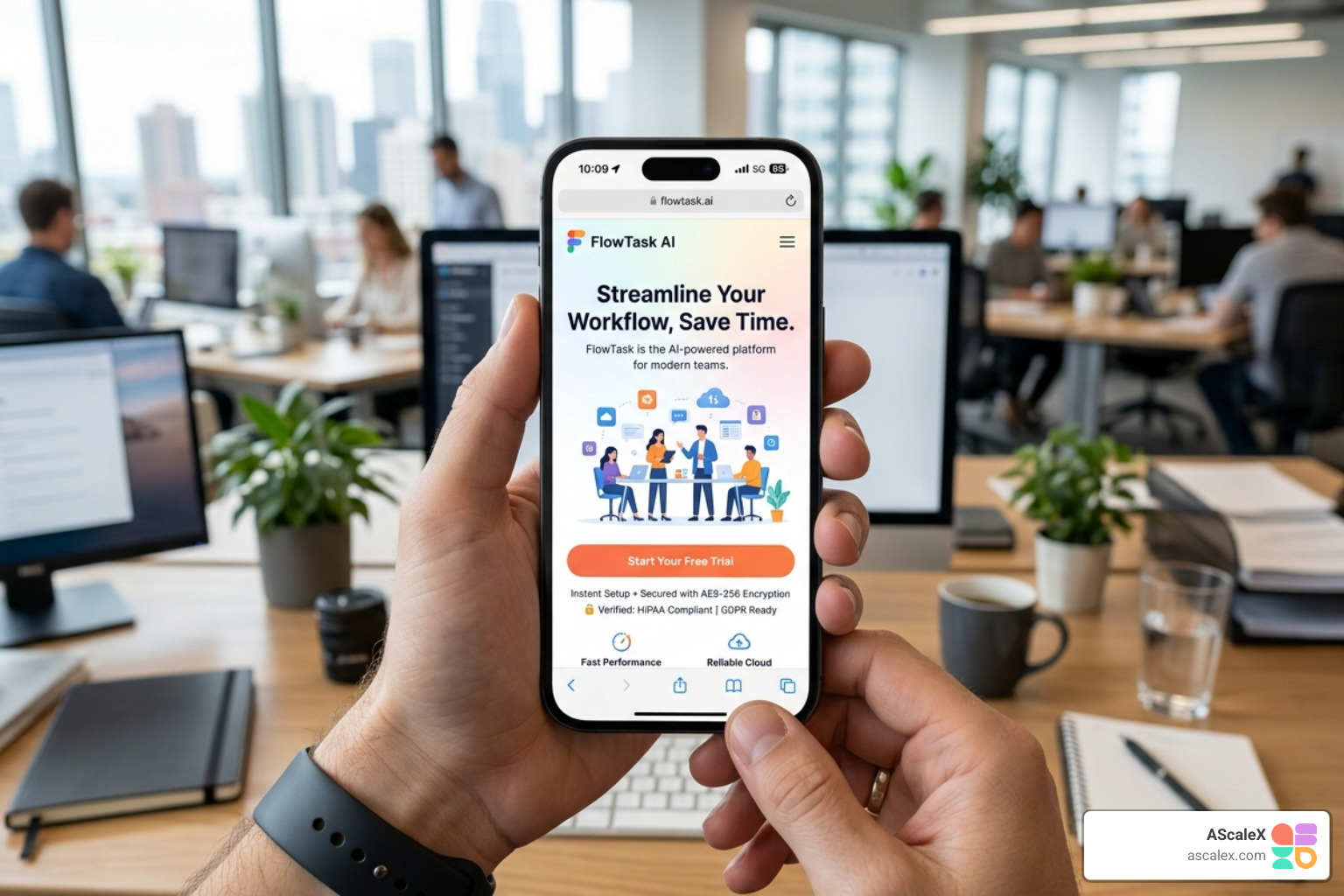
Google reports that bounce rates skyrocket if a page takes more than 3 seconds to load. In the high-speed world of tech, your audience has an attention span of about eight seconds. If they click an ad promising a “Cloud Security Audit” and land on your general homepage, they’ll leave. This is called message mismatch, and it absolutely kills your Quality Score.
Quality Score is a metric used by platforms like Google Ads to determine your ad rank and CPC. It’s heavily influenced by landing page relevance. A high Quality Score (7 or higher) can actually reduce your cost-per-click by 28–50%. To optimize the journey:
- Remove Friction: Keep forms short. Only ask for the info you absolutely need.
- Mobile Responsiveness: Over 50% of traffic is mobile. If your “Schedule a Demo” button is too small to tap on a smartphone, you are losing half your leads.
- Trust Signals: Include testimonials, SOC2 compliance badges, or partner logos to build immediate credibility with tech buyers.
4. Leverage AI and Automation with Human Guardrails
In 2026, AI-powered bidding is the industry standard, but “setting and forgetting” these tools is a recipe for disaster. Automation amplifies inputs; if you give an algorithm bad data or no constraints, it will optimize for its own version of success (usually spending your entire budget as fast as possible).
To avoid these Common Paid Ad Mistakes, you need to implement human guardrails.
| Feature | Manual Bidding | AI-Powered Automated Bidding |
|---|---|---|
| Control | Full control over every cent | Platform decides based on patterns |
| Scalability | Hard to manage 100+ campaigns | Designed for high-volume scaling |
| Risk | High chance of human error | Risk of “runaway” spend without caps |
| Best Use | New accounts with little data | Mature accounts with 30+ monthly conversions |
One of the best ways to maximize your reach while maintaining control is through Negative Keywords. These are terms you tell the platform not to show your ads for. For example, if you sell premium enterprise software, you should add “free,” “cheap,” and “DIY” to your negative keyword list. This prevents your budget from being eaten by people who have no intention of buying.
Use AI for Intent Clustering — grouping search terms by the user’s stage in the funnel — but perform weekly search term audits to ensure the machine isn’t bidding on “YouTube rap songs” (a real-world error that once cost an advertiser $500 in a single afternoon).
5. Combat Ad Fatigue with Rapid Creative Iteration
Even the most successful ad has a shelf life. As your target audience sees the same visual repeatedly, their engagement drops, and your costs rise. This is “ad fatigue,” and it happens silently.
The social media attention span has dropped from twelve seconds to eight seconds over the last decade. To break through the noise, you need a high-volume creative strategy. This is where Creative-as-a-Service (CaaS) models become invaluable. Instead of relying on a single “hero” video, you should be running 3–5 creative variations per audience segment.
- Vertical Video: Essential for mobile-first platforms like LinkedIn Stories or social feeds.
- Dynamic Creatives: Let the platform test different combinations of headlines and images to see what resonates.
- Frequency Caps: Set limits so a single user doesn’t see your ad more than 2–4 times in a week. Anything more than 6 times usually leads to “burnout” and negative brand sentiment.
By maintaining a “fresh” presence, you prevent the performance decay that plagues so many tech marketing campaigns.
Frequently Asked Questions About Paid Advertising
How do I identify ad fatigue in my tech campaigns?
The clearest sign of ad fatigue is a steady decline in Click-Through Rate (CTR) accompanied by a rising Cost Per Click (CPC) and Cost Per Acquisition (CPA), even when you haven’t changed your targeting. If your “Frequency” metric on platforms like Meta or LinkedIn is climbing above 3.0 for a cold audience, it’s time to refresh your creatives.
Why is mobile optimization non-negotiable for B2B tech ads?
While many B2B deals are closed on desktops, the discovery phase often happens on mobile. Professionals browse LinkedIn on their commute or check industry news on their phones. If your landing page or lead form isn’t mobile-friendly, you lose the prospect at the very top of the funnel. Furthermore, Google factors mobile-friendliness into your Quality Score, meaning a poor mobile experience literally makes your ads more expensive.
When should I transition from manual to automated bidding?
As a general rule of thumb, you should wait until a campaign has generated at least 30 conversions within a 30-day period. Automated bidding algorithms need “fuel” (data) to learn. If you switch to automation too early, the machine won’t have enough patterns to identify who your ideal buyer is, leading to erratic spending.
Start Building Paid Ads That Really Perform
Avoiding common paid ad mistakes isn’t just about technical settings; it’s about building a resilient process that combines data-driven strategy with high-impact creative. At AScaleX, we understand that tech companies need to scale rapidly without sacrificing quality or burning through precious capital.
By leveraging our global talent pool and cross-timezone support, we provide the continuous optimization and creative iteration needed to stay ahead of ad fatigue and platform shifts. Don’t let your growth be stalled by avoidable errors. Maximize your growth with our professional advertising services and ensure your paid media is a driver of profit, not a drain on your budget.